| |
-
What
do I need to get started?
- The three major pieces of equipment needed for spin casting
are:
Vulcanizer
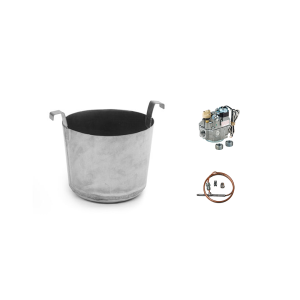
Melting
Furnace
Spin
Casting Machine
The approximate cost of this equipment is under $10,000.00 (not including freight
charges). Additional items such as mold rubber discs, casting alloy, and other
tools are also needed. The pricing on these items depends on your specific needs.
See The Basic Setup for more information.
-
Can
I purchase used equipment through Contenti?
- Yes, The Contenti Company sells a variety of used equipment.
All used equipment undergoes a thorough inspection and are completely refurbished
before leaving our facility. We provide complete customer support for all used
equipment purchases in addition to a 30 to 180 day warranty on parts. Please contact
us for more information on what equipment is available.
-
Is
training available?
- With the purchase of a spincasting system, The Contenti
Company will provide 1 day free training at our facility. Training at a customer's
facility is available for a modest fee in addition to travel and accommodation
cost. We are always available by phone, fax, and email for ongoing customer support
for any and all questions.
-
Which
mold rubber should I use?
- Each mold rubber compound sold by The Contenti Company
has unique characteristics which make it well suited for certain applications.
The durometer, flexibility, tear resistance, and temperature resistance of each
compound affects the quality of the mold and the parts cast from it. Factors
which should also be considered are: the size of the patterns to be cast, complexity
of the patterns, and the material being cast. The size of the rubber disc depends
on the size of the pattern. For more information, see our Mold
Rubber Comparison Chart.
-
If
casting in metal, what alloy should I use?
- Like rubber compounds, all alloys are not alike. When
choosing an alloy, several factors should be considered. Some of these factors
are: complexity and detail of the patterns, size, application (will items be
used to hold food/ beverages?), and cost. For more information, see the Casting
Alloy page.
-
Can
I cast other materials besides metal?
- Yes. Although zinc, tin and lead alloys are the most
common materials cast using the spincasting process, other materials such as
wax, resin, and thermoset plastics can also be used. These materials can be used
in the same silicone rubber molds used for casting metal.
-
Is
extensive training needed to achieve good results with spin casting?
- No. The techniques required to produce a basic rubber
mold can be mastered in an afternoon. More complex molds, with undercuts and
removable cores, require more practice. The casting process requires very little
training.
-
How
many pieces can be cast in an hour?
- For maximum efficiency, several molds should be used
in "rotation" when spin casting. Using multiple molds allows each mold
time to cool before it is cast again. A rate of 30 to 60 cycles per hour is average
when using a sufficient number of "typical" molds (containing parts
which are small and relatively flat). The total number of parts which can be
cast in an hour is a function of their size and complexity.
-
What
is the average life span of a spin casting mold?
- Spin casting molds which contain small relatively flat
parts can last as long as 1000 casting cycles. Molds containing larger, heavier
parts and those cast in zinc alloy have a somewhat shorter lifespan. The type
of rubber compound used to make the mold and the material being cast into it
will also effect the life span of the mold.
-
How
does spin casting compare to die casting and other methods of reproduction?
- The largest advantage of spincasting over die casting
and most other processes is the low cost of mold making (tooling). The lower
costs make it economical to cast items in very low quanties. Design changes can
also be made to parts after they have been cast, then another mold made to "perfect"
the design. And you don't lose out on cost savings when casting large quantites
of parts. Per part costs are similar to die casting.
-
How
much finishing is required for spin cast parts?
- If your spin casting mold is well-made, the cast parts
can be easily snapped off at the sprue by hand. Finishing the parts will depend
on the desired final appearance. Typically, spin cast parts are run through a
Vibratory Finisher, when necessary to smooth die lines, remove any burs, and
smooth imperfections. Since the die lines and sprues of spin cast items are small,
finishing time is minimal and often unnecessary. A reflective surface is attainable
by finishing the piece on a polishing lathe.
-
What
final finishes can be applied to spincast parts?
Electroplating
Antiquing
by darkening the casting with an oxidizing agent and buffing the raised surfaces.
Colored
epoxy inlays can be applied to recessed areas.
ASK A QUESTION
Do you have additional questions? Are you looking for more information about
Spin Casting? You can contact us directly.
Please fill out the form below and we will get back to you as soon as possible.
|
|
|